Humanoid Robots in the Factory: A Three-Year Outlook
What humanoid robots will do in factories over the next three years
Drawing on a human-robot box-moving contest and on-set voting, CCTV's "Dialogue" mapped a realistic deployment path for humanoid robots. Repetitive handling and harsh environments were judged most readily adoptable; flexible production remains unresolved. The humanoid form factor is valued chiefly for compatibility with existing plants; the coming contest hinges on converting industrial experience into reusable capability.
Based on CCTV's "Dialogue," the article assesses the three-year outlook for humanoid robots on factory floors. The human-robot contest quantified the baseline: the human finished in four minutes, the robot in roughly fifty—yet the robot's advantage lay in unflagging, sustained operation. Panelists diverged across four scenarios: repetitive handling and extreme-heat environments drew strong approval; precision assembly was widely favored; high-mix, low-volume production earned a single vote. The analysis holds that humanoid robots will first be deployed in high-intensity, highly repetitive, high-risk, relatively standardized posts—task-specialized robots, not universal ones. The form factor's worth is defined by compatibility with existing plant infrastructure rather than replication of human anatomy. The industry's binding constraint is data: a robot trained for one operation must be retrained for a different sector. China's complete manufacturing system and diversified industrial sectors provide essential groundwork. Future plants are expected to combine robotic arms, humanoid robots, and intelligent logistics equipment in layered collaborative systems, requiring enterprises to manage robot fleets as an organizational capability.
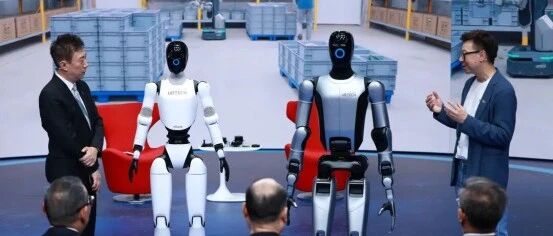
“Six scenarios have been singled out today. Can robots handle them in three years?” The question was posed on set by Chen Weihong, the China Media Group host. Panelists from robotics, automotive, logistics, and footwear industries delivered divergent verdicts.
Repetitive handling: approved by a wide margin.
Operations in extreme conditions—heat included—received unanimous approval.
Precision assembly and confined-space parts retrieval were endorsed by the majority.
High-mix, low-volume production, by contrast, received just a single vote of support.
The pace of technological advance stands against the discipline of plant-floor economics. Builders ask what robots may ultimately achieve; buyers ask whether tasks can be executed today with stability and at acceptable cost. Between the two judgments lies the distance humanoid robots must cross—from laboratory to production line. [IMAGE:1]
Four minutes against fifty—who prevailed?
The competition was staged by "Dialogue" inside an operating factory. [IMAGE:2]
In round one—empty boxes—field host Tian Yinnan needed four minutes; the humanoid robot Xiao Y required nearly fifty.
In round two, boxes were loaded to roughly ten kilograms. Tian Yinnan slowed to twelve minutes, pausing mid-task to recover his breath. Xiao Y again completed the round in approximately fifty minutes, its pace essentially unchanged.
On time alone, the human prevailed twice. Chen Weihong pressed the point on set: "If a robot moves boxes this much slower than a person, why deploy it in a factory?" [IMAGE:3]
Zhou Jian, founder, chairman, and chief executive of UBTech, responded that sustained heavy handling entails repeated bending, grasping, and placement—work that takes a lasting toll on the human body. Robot speed may be limited today; as payloads and shift lengths grow, however, the virtue of uninterrupted operation will become apparent. [IMAGE:4]
Peng Zuolin, assistant general manager and manufacturing chief at Dongfeng Liuzhou Motor, offered an apt analogy: humans are sprinters; robots, marathoners. Over short distances humans are inevitably faster; over extended runs, robots sustain speed and output without fatigue-induced decay.
Robotic performance in industrial settings, therefore, cannot be measured by single-cycle speed alone. Takt time, precision, failure rates, and safety across a full shift must also be weighed. Enduring reliability is the criterion factories ultimately apply.
Repetitive handling to flexible production: the road ahead
How far can three years carry the field?
The on-set judgments in "Dialogue" delineated a comparatively distinct adoption trajectory.
Repetitive handling and extreme-environment tasks drew the strongest backing: their objectives are unambiguous, their processes largely standardized, and their requirements—uninterrupted operation and production safety—are stringent.
Over the next three years, then, humanoid robots are likely to be placed first in high-intensity, highly repetitive, high-risk, and comparatively standardized roles. The earliest to mature will be task-specialized robots that clear the bars of safety, reliability, and cost at designated workstations; the omnicompetent general-purpose robot remains distant.
Precision assembly, random-defect detection, and confined-space parts retrieval pose materially higher difficulty. Beyond object recognition, robots must evaluate position, dimensions, and state, then coordinate arms, torso, and joints accordingly. When parts arrive skewed, occluded, or stacked, motion plans must be recomputed on the spot.
These tasks, Zhou Jian conceded on air, strain both the robot's "brain" and its "body." Visual perception, whole-body coordination, and eventual force and tactile feedback must advance in tandem. In sorting and other pace-critical processes, accuracy of grasp must be matched by a gradual approach to human-level speed.
High-mix, low-volume production drew the most extended discussion.
Zhou Jian stood alone in endorsing the scenario. Conventional arms, he argued, are bound to a workstation and typically execute one task. A humanoid robot with sufficient generalization, by contrast, could ingest data across products and processes and pivot between tasks. [IMAGE:5]
A contrary assessment came from Pan Jianzhong, chairman of Juyi Group and president of the Wenzhou Footwear & Leather Industry Association, speaking from footwear-industry practice.
Footwear is style-driven and fast-moving: seasonal trends can flip entirely, and men's, women's, and assorted lines differ sharply. Were every style change to demand fresh data collection, model training, and process validation, robots would still be learning when orders were completed and market windows had closed.
The divergence exposed robotics' defining obstacle: data. Automotive assembly, logistics sorting, and footwear manufacturing operate under distinct materials, processes, cycle times, and quality standards. A robot proficient in one operation typically requires retraining to enter a different sector.
Competition over the next three years will be waged on hardware performance, authentic deployment scenarios, high-quality data, and industrial experience. The advantage will accrue to whoever converts veteran craftsmanship into capabilities robots can learn, reuse, and scale.
A progressive maturation curve is therefore plausible: from controlled to semi-open environments, from isolated tasks to coordinated multitasking, and, eventually, to competence in small-batch, rapidly changing production. The factory functions simultaneously as deployment site and training ground.
Why humanoid at all?
The answer resides in the factory and its supply chain
Chen Weihong raised a further pivotal question: given mature assembly lines and robotic arms, why invest in humanoids at all?
Conventional arms excel at stationary, well-specified operations—welding, painting—executed at exceptional speed and precision; leaving the fixed station, however, is rarely within their capability.
The humanoid's value is defined by its fit within the installed production environment. Factories, aisles, workbenches, and tooling were engineered for the human body. A robot of approximately human form can, absent wholesale line retrofitting, wield incumbent tooling, navigate existing spaces, and relocate across stations.
The humanoid form factor thus derives its industrial worth from fitting a physical world constructed for humans.
A more explicit division of labor is likely to emerge among arms, humanoids, and intelligent logistics equipment: fixed, highly prescribed processes remain with the arms; mobility- and flexibility-dependent segments pass to humanoids; transport and scheduling accrue to logistics systems. Together, these form factors will constitute the next factory's automation architecture.
The program's lens also fell on a humanoid robot's dissected joints—its equivalent of an automotive engine—governing stability under load, shock resistance, and precision manipulation. [IMAGE:6]
Each joint integrates reducers, motors, sensors, materials, control software, and machining processes. Long-run industrial service further demands a managed trade-off among accuracy, force, reliability, and lifespan.
Zhou Jian recalled that procurement from overseas suppliers was weighed early on; prohibitive core-component pricing redirected the firm toward domestic substitution, beginning with joints. Years of development have since brought its joints to scale-manufacturing readiness.
The episode demonstrates that humanoids are a concentrated test of manufacturing fundamentals. Artificial intelligence must supply the "brain"; mechanical, electronic, materials, and energy systems must shape the "body"; and automotive, electronics, logistics, and footwear sectors must furnish authentic deployment environments.
China's integrated manufacturing system and broad industrial base enable iterative refinement of components within supply chains, validation of finished machines on shop floors, and continuous data acquisition by algorithms from actual operations. Such industrial depth constitutes the essential foundation of its humanoid-robot program.
From standalone deployment to fleet coordination
What calculus will enterprises apply?
Adoption of the technology rests on demonstrated capability and on a hardheaded economic reckoning alike. [IMAGE:7]
Price, Zhuo Xu of Damon Technology Group argued on air, is but one variable in enterprise procurement decisions. Where the fully loaded payback period proves compelling, manufacturers will tolerate robots initially less efficient than people.
Procurement of robots, in Zhuo Xu's view, is in essence the purchase of production capability. Equipment price is consequential; uptime, maintenance expense, failure downtime, safety performance, and task adaptability are equally decisive to ultimate returns.
Zhou Jian outlined the factory floor as it may appear within three years:
Layer one: conventional arms retain fixed operations, stamping and body welding among them.
Layer two: humanoids assume material handling, machine tending, assembly, and other mobile, dexterity-dependent tasks. Equipment status is monitored from terminals by floor staff, who intervene as exceptions arise.
Layer three: a plant-wide control system directs the fleet—unified scheduling, quality control, and condition monitoring.
Future plants, accordingly, must own robots and orchestrate fleets. Only with production plans, task dispatch, quality inspection, and equipment maintenance linked into a single system can single-robot capability be converted into line-level efficiency.
The advent of humanoids may, in turn, reshape the organization of production itself.
The prize China seeks
command of the next manufacturing paradigm.
Humanoid robots are accelerating onto production lines, emerging as a fresh growth engine for industry. The contest should be judged not merely on shipment scale and unit cost but on the structural change it will impose on manufacturing. The strategic objective for China is command of the next manufacturing paradigm.
Each vantage point yielded a distinct reading: Peng Zuolin, from the assembly line, on the value of sustained autonomous operation; Pan Jianzhong, from footwear, on the data burden of flexible production; Zhuo Xu, on the returns to scale; Zhou Jian, on the supply side, on advancing general-purpose capability. Taken together, they plot the coordinates of China's transition from workplace entry to systemic adoption.
Manufacturing competition will increasingly turn on three capacities: embedding artificial intelligence deeper into production; endowing robots with mastery of genuine processes; and converting plant-level experience into industrial capability that is reproducible and transferable.
The industry's watershed over the next three years: whether humanoids can graduate from discrete deployments to value creation at scale. On that hinge turns China's claim to leadership in the next generation of manufacturing.