Public Showdown Erupts Between Codex and Claude Code Leadership
Frontiers

Public Showdown Erupts Between Codex and Claude Code Leadership

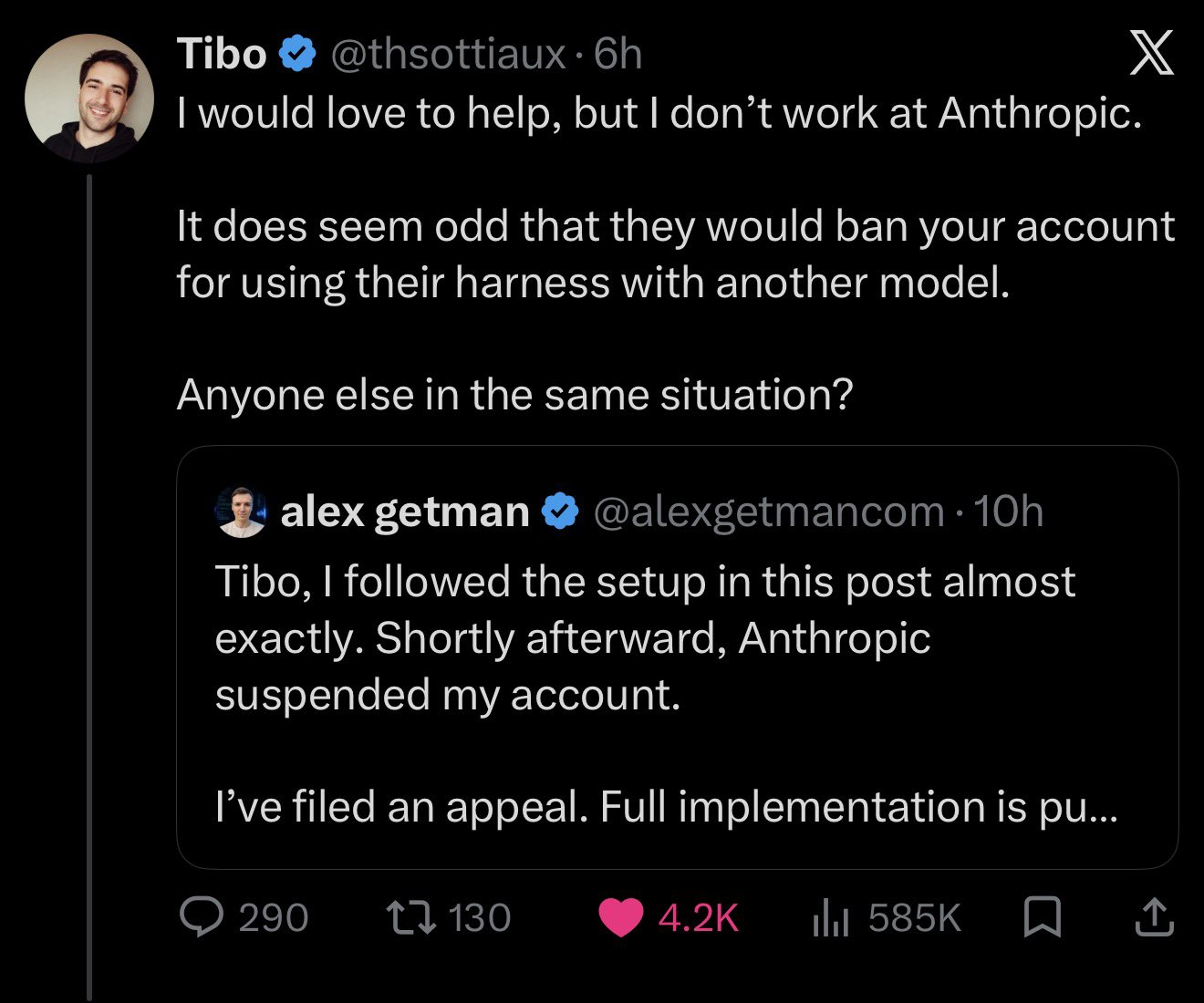
A developer account suspension triggered a public confrontation between the heads of OpenAI's and Anthropic's coding agent products. After Tibo publicly instructed developers on injecting GPT-5.6 Sol into Claude Code, followers were suspended; Boris clarified that model substitution would not incur enforcement, restored the affected account, and saw a public recruiting overture declined. Competitive attention has shifted to the harness.

Tools

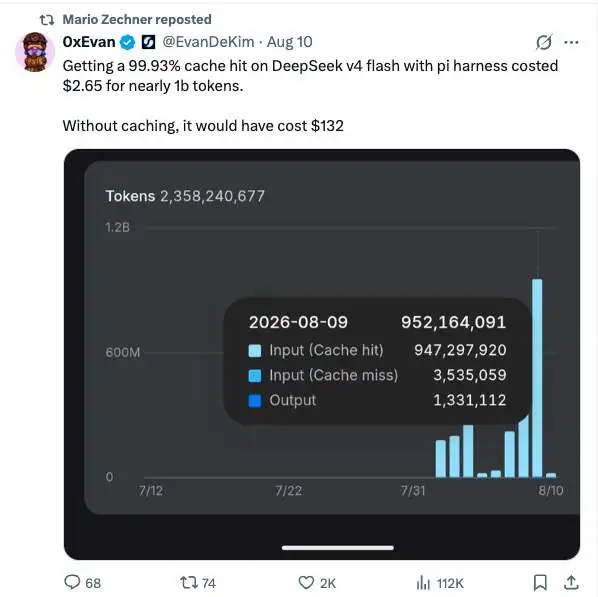
DeepSeek Releases Harness as Open Source, With Models, Tools, and Agent Loop Built as Plugins

DeepSeek has opened Harness v0.1 to developers under the MIT license. Built on the principle that 'everything is a plugin' — models, tools, skills, sessions, sandboxes, storage, Agent Loop, scheduling, and UI are all replaceable and assembled by Cordis — the preview ships four operating modes and multi-agent orchestration, with an append-only log underpinning observability and replay. Its prospects will be decided by the plugin ecosystem.

Rust Codifies New Rules for AI Coding: AI May Review, but Not Author; Excessive Use Trips a 'Circuit Breaker'
Dev Hub

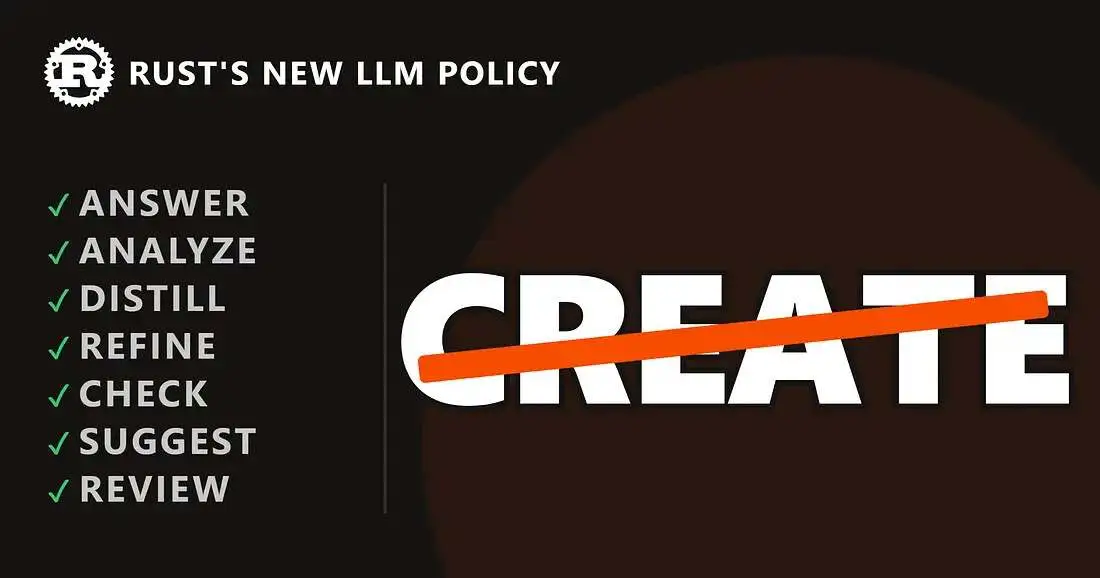
Rust Codifies New Rules for AI Coding: AI May Review, but Not Author; Excessive Use Trips a 'Circuit Breaker'

Five Rust teams have codified an LLM policy: models may answer, analyze, review, and translate, but may not 'create' code, documentation, or diagnostics. Authorized AI-assisted changes require a designated reviewer, avoidance of critical code, and disclosure; new contributors are restricted. When LLM-created PRs account for more than half of merges in any six-week period, merging is suspended — a circuit breaker contrasting with Zig's outright prohibition.

From PUE to TPW: SenseTime's AI Infrastructure Unit Proposes a New Efficiency Standard
Frontiers

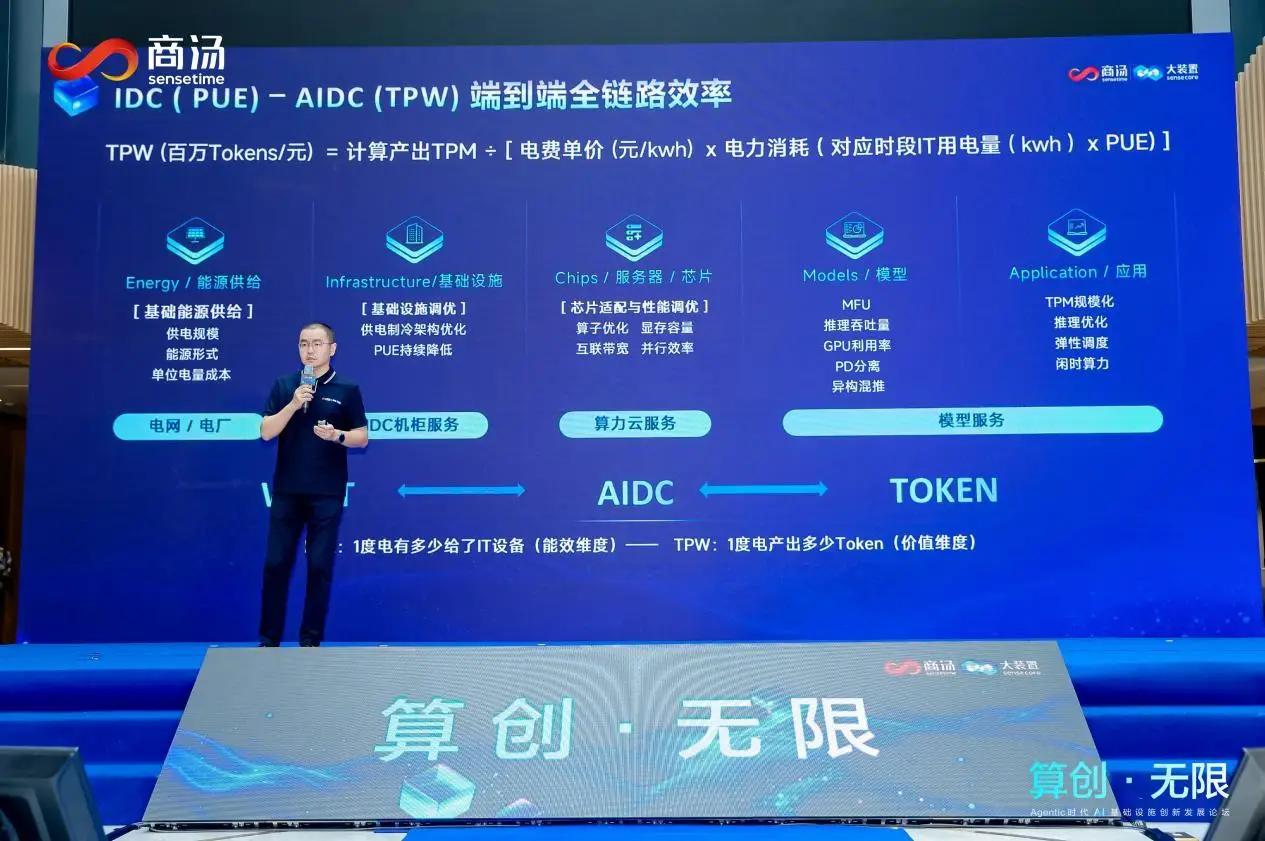
From PUE to TPW: SenseTime's AI Infrastructure Unit Proposes a New Efficiency Standard

SenseTime's AI infrastructure unit has proposed TPW (Tokens Per Watt) as a replacement for PUE, linking power input to token output in a single efficiency measure, and deployed a compute-energy coordination Agent that schedules compute and energy jointly. Field results at the Lingang AIDC: midday load reduced 75%, 46,000 kWh released for peak shaving, token output per unit of electricity up 80%, forecast accuracy 96%.

Inside the CTO Roundtable: Engineering Leaders on Building the AI-Native Organization | Technology Trends
Frontiers

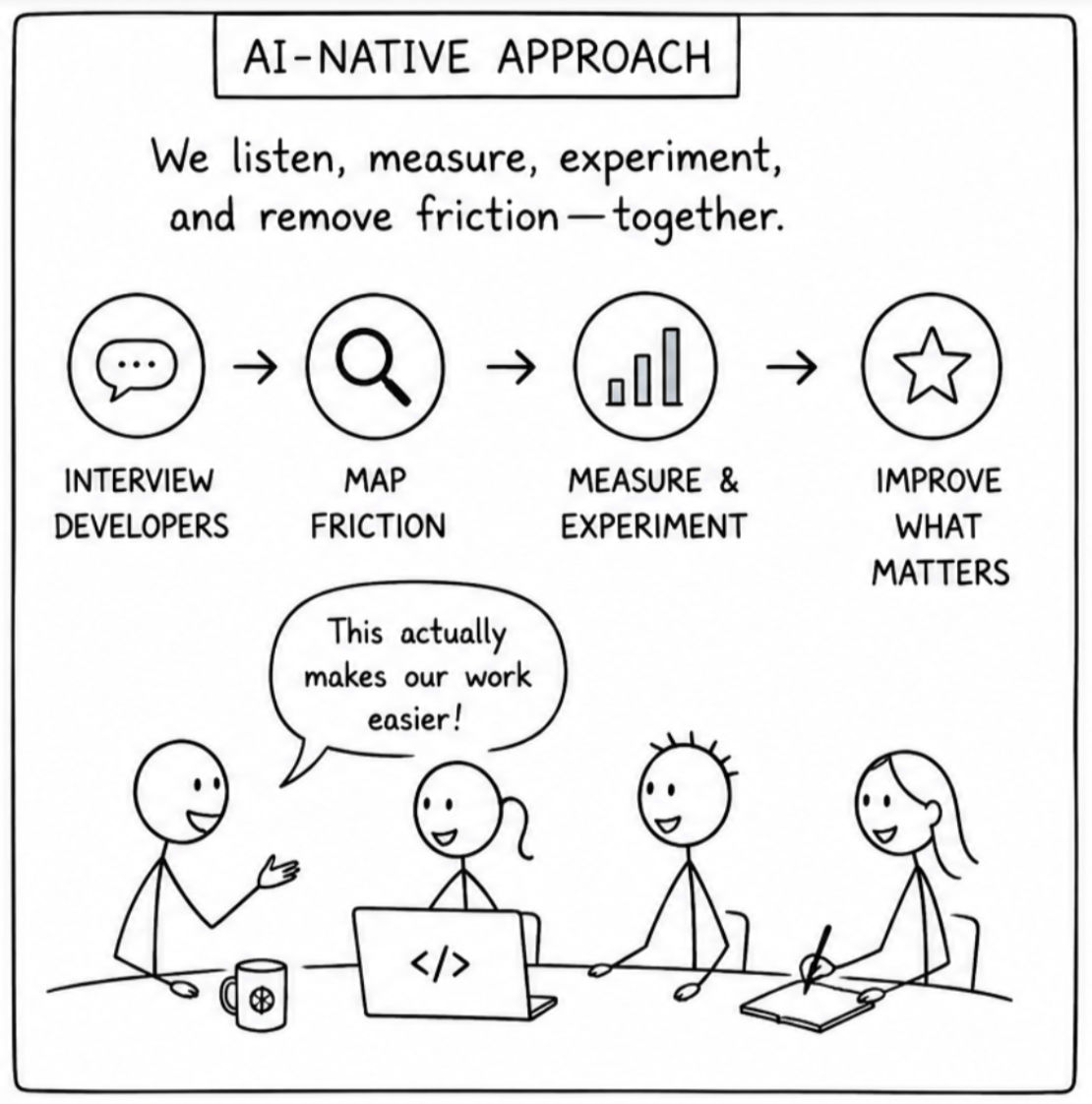
Inside the CTO Roundtable: Engineering Leaders on Building the AI-Native Organization | Technology Trends

Snowflake convened the CTO Circle, gathering more than 350 CTOs to examine the AI-native organization. Developer productivity, managed as a product, produced a marked rise in NPS. AI adoption proceeds through three stages—Adoption, Mastery, and Optimization. As engineering teams are rebuilt for AI, engineer value migrates to judgment and architecture; review has emerged as the new constraint.

MiniMax Unveils Music3, a Music Model Capable of Generating Songs Up to Five Minutes Long From Lyrics and Descriptions
Tools

MiniMax Unveils Music3, a Music Model Capable of Generating Songs Up to Five Minutes Long From Lyrics and Descriptions

MiniMax has released MiniMax-Music3, a music-generation model that converts lyrics and descriptions into complete songs of up to five minutes in 32kHz stereo. Built on a hierarchical autoregressive architecture, the system pairs an 8B global language model—responsible for long-range semantics and structure—with a 0.6B local model that reconstructs acoustic detail, sustaining theme, rhythm, and arrangement throughout. The model is publicly listed on Hugging Face, with sample tracks available for review.

More than 200 partners have already joined, as Qwen's open platform speeds deployment of AI agents
Frontiers

More than 200 partners have already joined, as Qwen's open platform speeds deployment of AI agents

Four days after launch, the Qwen Open Platform has drawn more than 200 ecosystem partners. Developers can build AI agents and integrate them with the Qwen app, with coverage spanning logistics, property, local services, wealth management, and autos. SF Express, Beike, Lenovo, Cainiao, and Quark Drive are among those already onboarded. By supplying accounts, AI payment rails, order integration, and front-end templates, the platform lowers entry costs and positions AI agents as access points to real-world services.

Frontiers

Apple's HomePod mini 2 Is Expected This Fall, Six Years After the Original, With the AI Chip Driving the Refresh

The second-generation HomePod mini is expected as soon as this fall, nearly six years after the original's debut. Its delay has been attributed largely to Apple's wait for a mature next-generation Siri. The new model will carry a faster chip to meet the on-device AI requirements of the assistant, alongside upgrades to UWB connectivity and audio quality. Multiple hardware lines have been pushed back by the pace of Apple's AI development; the entry-level speaker is now framed as a testbed for on-device AI and a bid to repair Siri's standing.

Ant LingBot Debuts LingBot-Depth 2.0: A Spatial Perception Model Trained on 150 Million Samples, Achieving Sharper Vision and Greater Precision
Tools

Ant LingBot Debuts LingBot-Depth 2.0: A Spatial Perception Model Trained on 150 Million Samples, Achieving Sharper Vision and Greater Precision

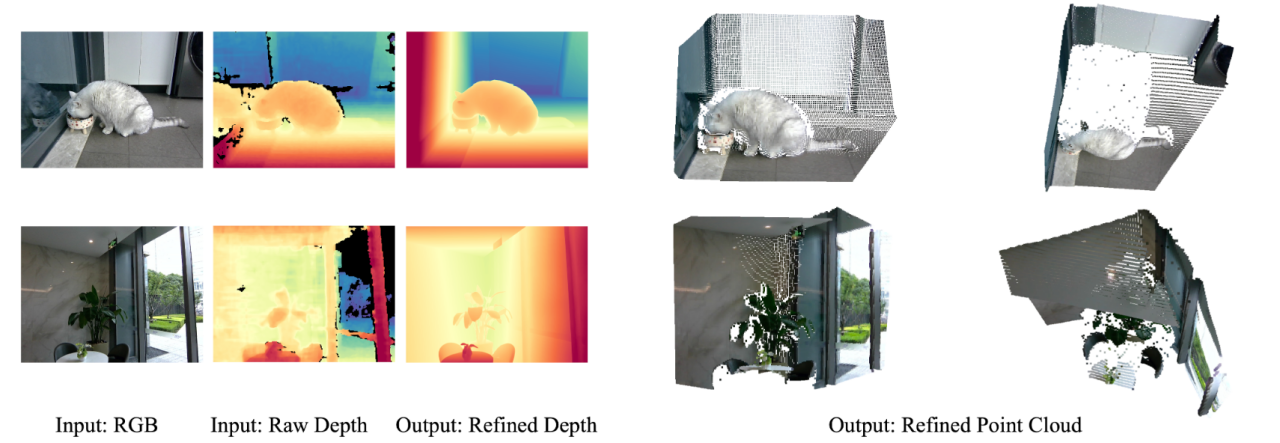
On July 7, LingBot Technology — the embodied-intelligence arm of Ant Group — unveiled LingBot-Depth 2.0, a spatial perception model trained on a 150-million-sample dataset. Improvements span edge sharpness, fine-object detection, long-distance depth estimation, and robustness under complex scenes. LingBot-Depth, LingBot's proprietary spatial perception model, functions as a robot's vision system in physical environments...

Frontiers

Anthropic and OpenAI Stake Concurrent Claims in AI4S, as the Industry Pivots from Model Superiority to Ecosystem Capture

On June 30, Anthropic and OpenAI simultaneously entered the AI4S race. Anthropic unveiled Claude Science, a research agent workbench, with an explicit declaration that it 'does not rely on new models,' opting instead to bundle existing capabilities into workflows that encompass scientists' routine research. OpenAI introduced GeneBench-Pro, a benchmark spanning genomics, quantitative biology, and eight additional domains.

Agents That Improve Through Use: AReaL 2.0 Open-Sources a 'Growth System' for Intelligent Agents
Tools

Agents That Improve Through Use: AReaL 2.0 Open-Sources a 'Growth System' for Intelligent Agents

On July 2, AReaL, the open-source reinforcement learning infrastructure project, launched version 2.0. The release targets Agents deployed in real-world business environments, delivering a system infrastructure that enables continuous learning during active use. Agents are now operating in production settings—writing code, retrieving information, invoking tools, and executing increasingly complex tasks across enterprise systems.