Deep Reads

Musk's Daughter Walks a Robot on a Leash in Campaign Film, Assails AI's Threat to Human Employment

Vivian Wilson, the 22-year-old daughter of Elon Musk, has been named face of Desigual's fall campaign. Its 'Born Rebellious' film shows her walking a Tesla-inspired robot on a leash, pressing it into service as a golf tee, and driving it to a full shutdown — a machine portrayed by an actor and finished in 3D, a dark-humored rebuttal to fears that AI will displace human labor. In interviews, Ms. Wilson faulted generative AI for shrinking creative opportunities and adding environmental strain, maintained that art is defined by a human emotional core, and counseled reduced consumption and the hands-on reworking of old garments.

Business

Israeli-Dutch AI Unicorn Wonderful Raises $550 Million Series C at $5 Billion Valuation

Wonderful, an Israeli-Dutch developer of AI agents for customer service in non-English markets, has completed a $550 million Series C at a $5 billion valuation, more than double its level less than six months earlier. Insight Partners led the financing; Salesforce participated for the first time. Proceeds are earmarked for its AI OS platform, expansion of forward-deployed engineering teams, and accelerated global growth.

Deep Reads

Recurrent Depth in OpenAI's Astra: A Performance Breakthrough, Tempered by Safety Concerns

OpenAI's latest Astra model is built on 'recurrent depth,' whereby a single weight set is cycled through repeated computation to sharpen reasoning at reduced cost—while the bulk of its chain of thought is concealed. Monitoring and self-imposed constraints notwithstanding, opaque reasoning is widely viewed as eroding the efficacy of safety oversight. The company, which once joined Anthropic and Google in defending chain-of-thought mechanisms, now counts Meta and Microsoft among rivals pursuing parallel lines of inquiry.

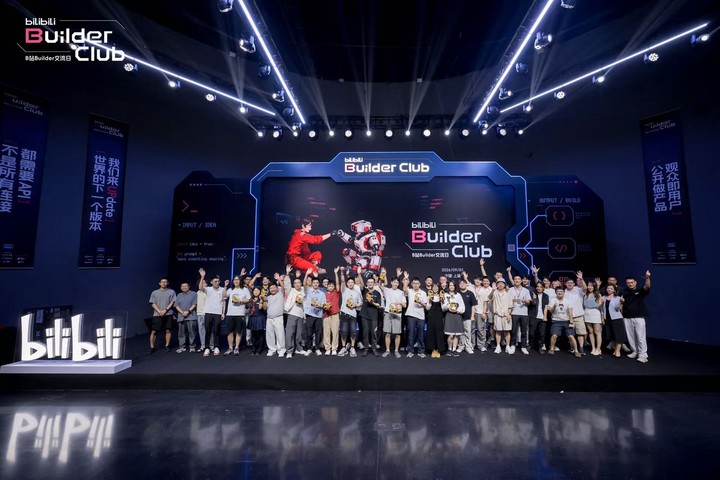
The barrier to creation has been lowered by AI; Bilibili now seeks to magnify the resonance that follows.
Business

The barrier to creation has been lowered by AI; Bilibili now seeks to magnify the resonance that follows.

Of 13,400 submissions to Bilibili's AI Creation Open Competition, nearly nine in ten were entered by creators with fewer than 10,000 followers, most lacking professional credentials. Working alone for roughly half a year, Diankao Huangdaiyu produced World Gate, an AI-generated open-world game whose introduction video has been viewed 4.96 million times. A separate amateur effort — Fan Ge's AI-powered glasses for the blind — was refined through user collaboration. With compute, distribution and feedback supplied by the platform, the hurdle to building has been leveled and the echo of creation amplified.

AMD pursues universal “Token Freedom”?
Business

AMD pursues universal “Token Freedom”?

At IFA 2026, AMD introduced Gorgon Halo, lifting unified memory to 192GB for on-device deployment of 300-billion-parameter models, and, with Lenovo and HP, assembled a PC-to-workstation “personal AI” ladder. Cloud subscription costs are weighed against one-time local outlay, and local deployment is positioned as the route to “token freedom.” An edited transcript of executive remarks on personal computing and open ecosystems is appended.

Dev Hub

Models and Harnesses Distinguished: Why the Harness Cannot Be Internalized

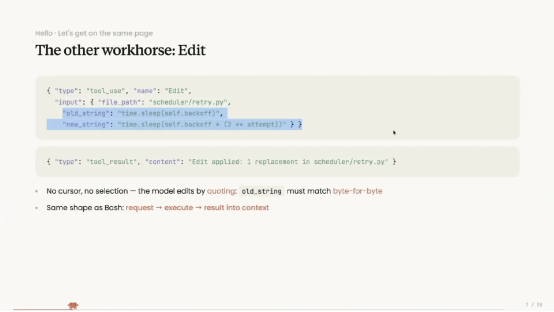
Against the claim that Astra has outgrown Codex and that the coding harness has been internalized, Baoyu argues from principle: strategic knowledge—tool invocation, task decomposition—can be encoded in weights; the harness's execution duties—command dispatch, sandbox management, state recovery—cannot. A stronger Astra only thins the harness or raises its demands. The two relate as mind to hands: mutually dependent, never substitutable.

Humanoid Robots in the Factory: A Three-Year Outlook
Business

Humanoid Robots in the Factory: A Three-Year Outlook

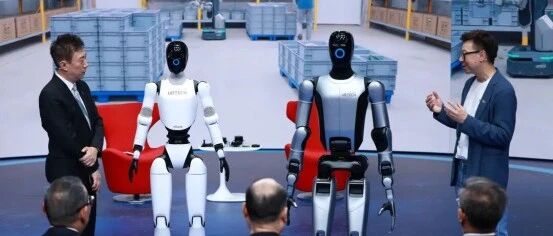
Drawing on a human-vs-robot box-moving contest on CCTV's "Dialogue," the article notes that robots remain far slower than people yet capable of sustained, stable operation. Repetitive handling and extreme environments drew broad endorsement; high-mix, low-volume work proved most divisive. The projection: high-intensity, repetitive, risk-laden roles will be filled first, the form factor's value rests in compatibility with existing plants, and China must codify manufacturing know-how that can be transferred and scaled.

Public Showdown Erupts Between Codex and Claude Code Leadership
Frontiers

Public Showdown Erupts Between Codex and Claude Code Leadership

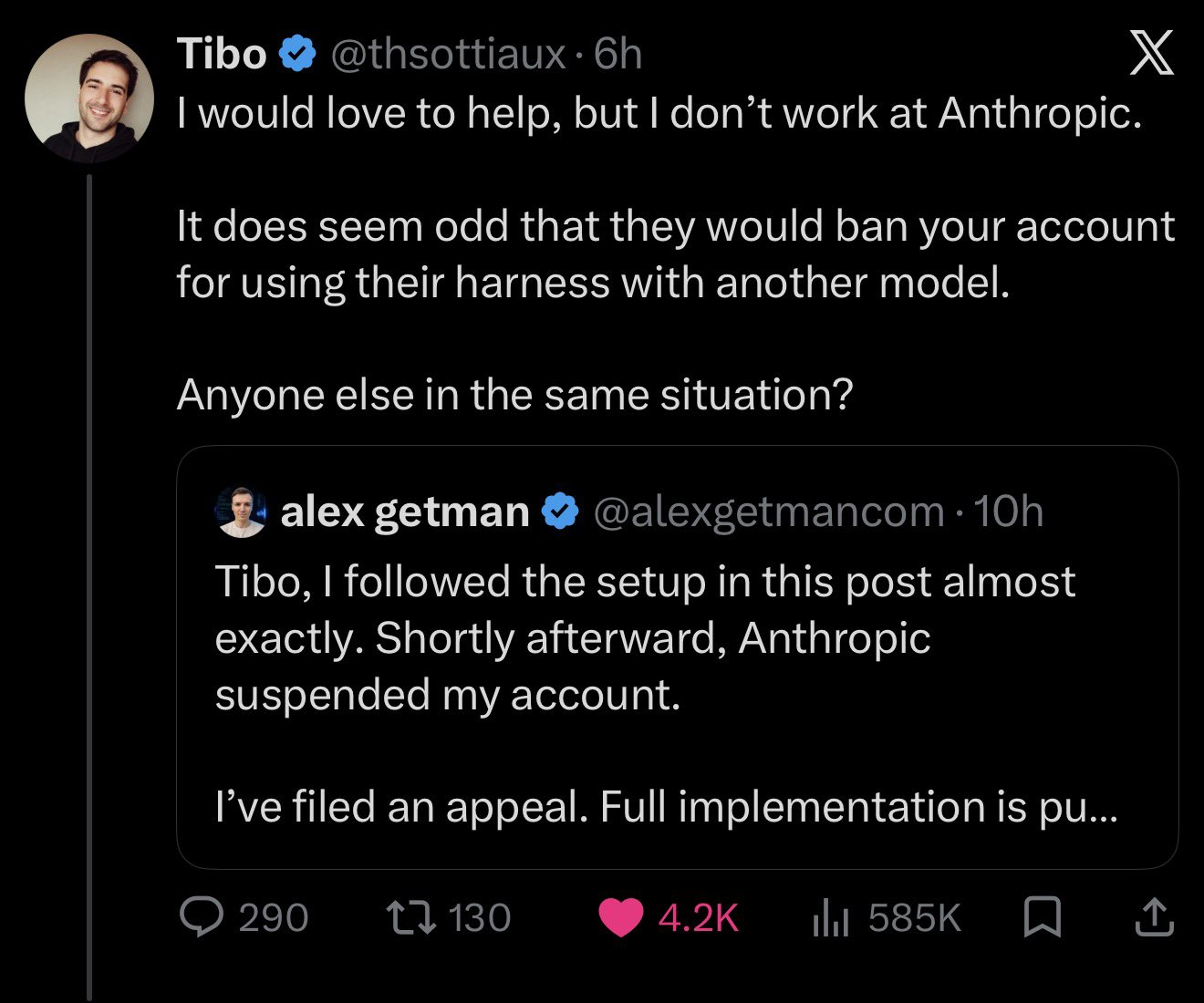
A developer account suspension triggered a public confrontation between the heads of OpenAI's and Anthropic's coding agent products. After Tibo publicly instructed developers on injecting GPT-5.6 Sol into Claude Code, followers were suspended; Boris clarified that model substitution would not incur enforcement, restored the affected account, and saw a public recruiting overture declined. Competitive attention has shifted to the harness.

Tools

DeepSeek Releases Harness as Open Source, With Models, Tools, and Agent Loop Built as Plugins

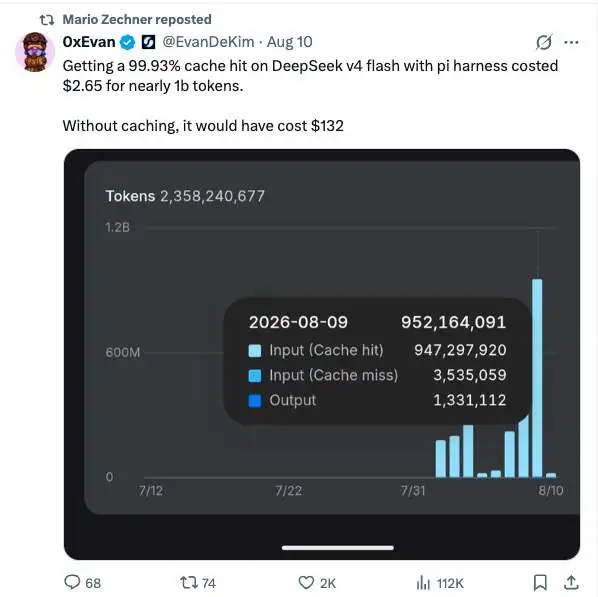
DeepSeek has opened Harness v0.1 to developers under the MIT license. Built on the principle that 'everything is a plugin' — models, tools, skills, sessions, sandboxes, storage, Agent Loop, scheduling, and UI are all replaceable and assembled by Cordis — the preview ships four operating modes and multi-agent orchestration, with an append-only log underpinning observability and replay. Its prospects will be decided by the plugin ecosystem.

Rust Codifies New Rules for AI Coding: AI May Review, but Not Author; Excessive Use Trips a 'Circuit Breaker'
Dev Hub

Rust Codifies New Rules for AI Coding: AI May Review, but Not Author; Excessive Use Trips a 'Circuit Breaker'

Five Rust teams have codified an LLM policy: models may answer, analyze, review, and translate, but may not 'create' code, documentation, or diagnostics. Authorized AI-assisted changes require a designated reviewer, avoidance of critical code, and disclosure; new contributors are restricted. When LLM-created PRs account for more than half of merges in any six-week period, merging is suspended — a circuit breaker contrasting with Zig's outright prohibition.

From PUE to TPW: SenseTime's AI Infrastructure Unit Proposes a New Efficiency Standard
Frontiers

From PUE to TPW: SenseTime's AI Infrastructure Unit Proposes a New Efficiency Standard

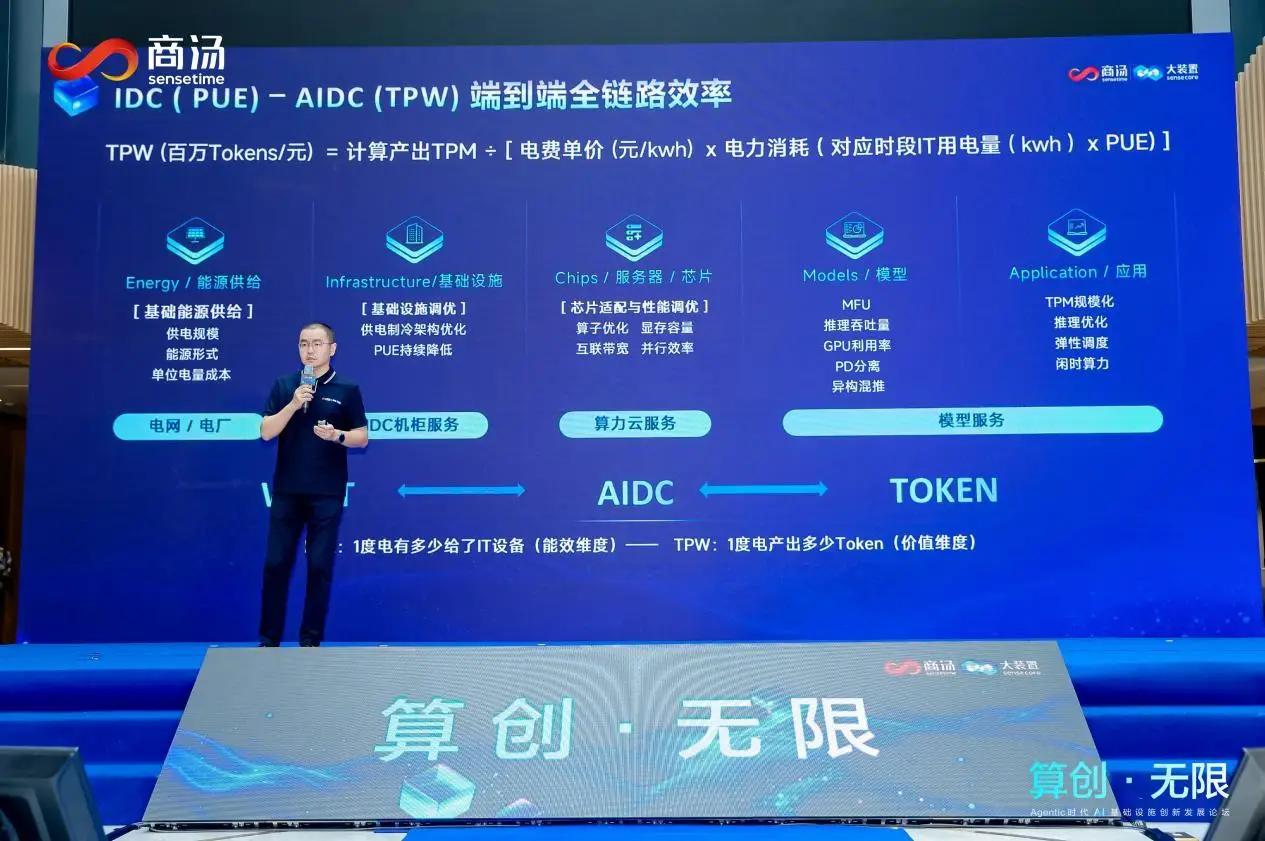
SenseTime's AI infrastructure unit has proposed TPW (Tokens Per Watt) as a replacement for PUE, linking power input to token output in a single efficiency measure, and deployed a compute-energy coordination Agent that schedules compute and energy jointly. Field results at the Lingang AIDC: midday load reduced 75%, 46,000 kWh released for peak shaving, token output per unit of electricity up 80%, forecast accuracy 96%.

Inside the CTO Roundtable: Engineering Leaders on Building the AI-Native Organization | Technology Trends
Frontiers

Inside the CTO Roundtable: Engineering Leaders on Building the AI-Native Organization | Technology Trends

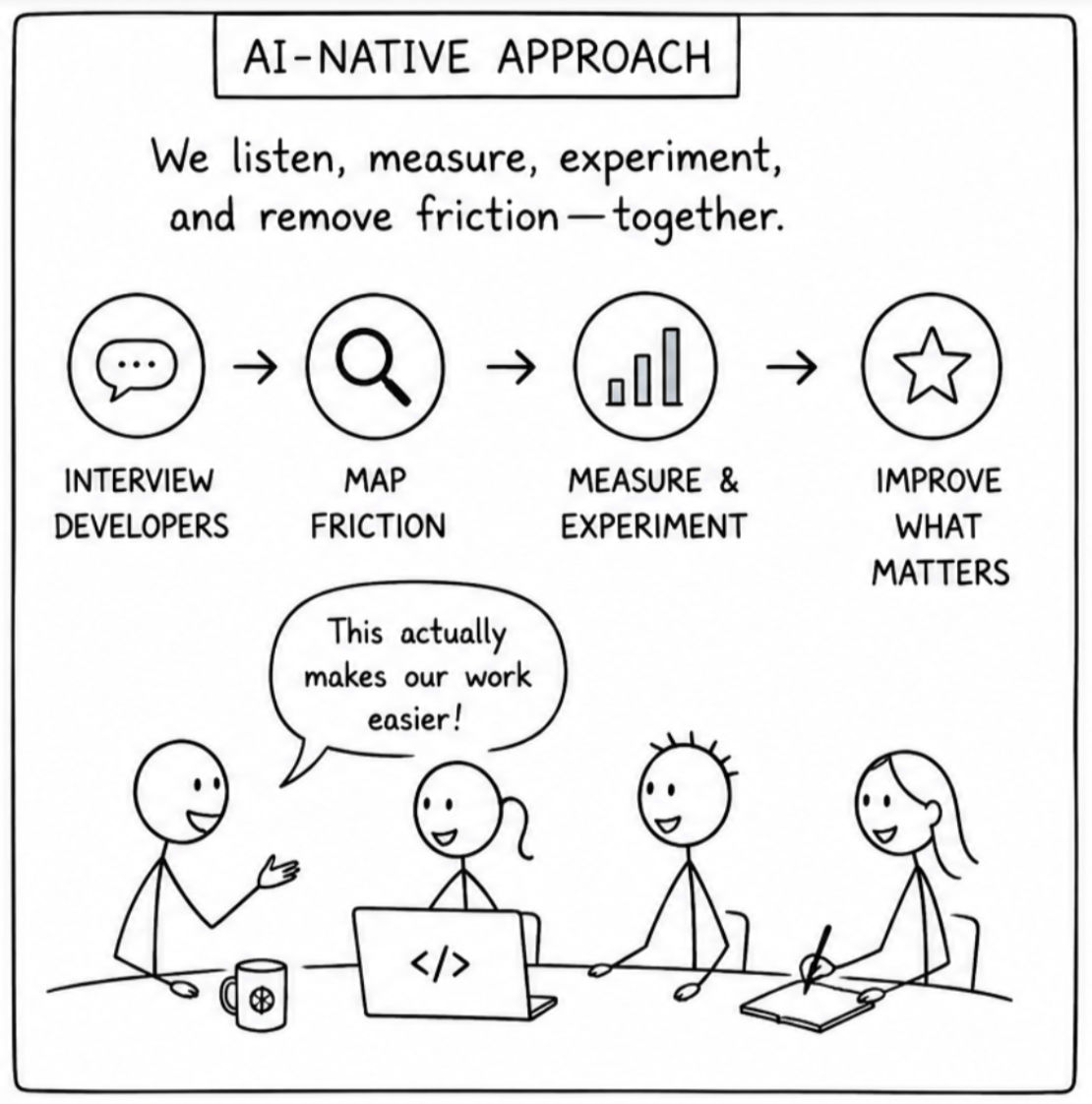
Snowflake convened the CTO Circle, gathering more than 350 CTOs to examine the AI-native organization. Developer productivity, managed as a product, produced a marked rise in NPS. AI adoption proceeds through three stages—Adoption, Mastery, and Optimization. As engineering teams are rebuilt for AI, engineer value migrates to judgment and architecture; review has emerged as the new constraint.

MiniMax Unveils Music3, a Music Model Capable of Generating Songs Up to Five Minutes Long From Lyrics and Descriptions
Tools

MiniMax Unveils Music3, a Music Model Capable of Generating Songs Up to Five Minutes Long From Lyrics and Descriptions

MiniMax has released MiniMax-Music3, a music-generation model that converts lyrics and descriptions into complete songs of up to five minutes in 32kHz stereo. Built on a hierarchical autoregressive architecture, the system pairs an 8B global language model—responsible for long-range semantics and structure—with a 0.6B local model that reconstructs acoustic detail, sustaining theme, rhythm, and arrangement throughout. The model is publicly listed on Hugging Face, with sample tracks available for review.

More than 200 partners have already joined, as Qwen's open platform speeds deployment of AI agents
Frontiers

More than 200 partners have already joined, as Qwen's open platform speeds deployment of AI agents

Four days after launch, the Qwen Open Platform has drawn more than 200 ecosystem partners. Developers can build AI agents and integrate them with the Qwen app, with coverage spanning logistics, property, local services, wealth management, and autos. SF Express, Beike, Lenovo, Cainiao, and Quark Drive are among those already onboarded. By supplying accounts, AI payment rails, order integration, and front-end templates, the platform lowers entry costs and positions AI agents as access points to real-world services.

Frontiers

Apple's HomePod mini 2 Is Expected This Fall, Six Years After the Original, With the AI Chip Driving the Refresh

The second-generation HomePod mini is expected as soon as this fall, nearly six years after the original's debut. Its delay has been attributed largely to Apple's wait for a mature next-generation Siri. The new model will carry a faster chip to meet the on-device AI requirements of the assistant, alongside upgrades to UWB connectivity and audio quality. Multiple hardware lines have been pushed back by the pace of Apple's AI development; the entry-level speaker is now framed as a testbed for on-device AI and a bid to repair Siri's standing.

Ant LingBot Debuts LingBot-Depth 2.0: A Spatial Perception Model Trained on 150 Million Samples, Achieving Sharper Vision and Greater Precision
Tools

Ant LingBot Debuts LingBot-Depth 2.0: A Spatial Perception Model Trained on 150 Million Samples, Achieving Sharper Vision and Greater Precision

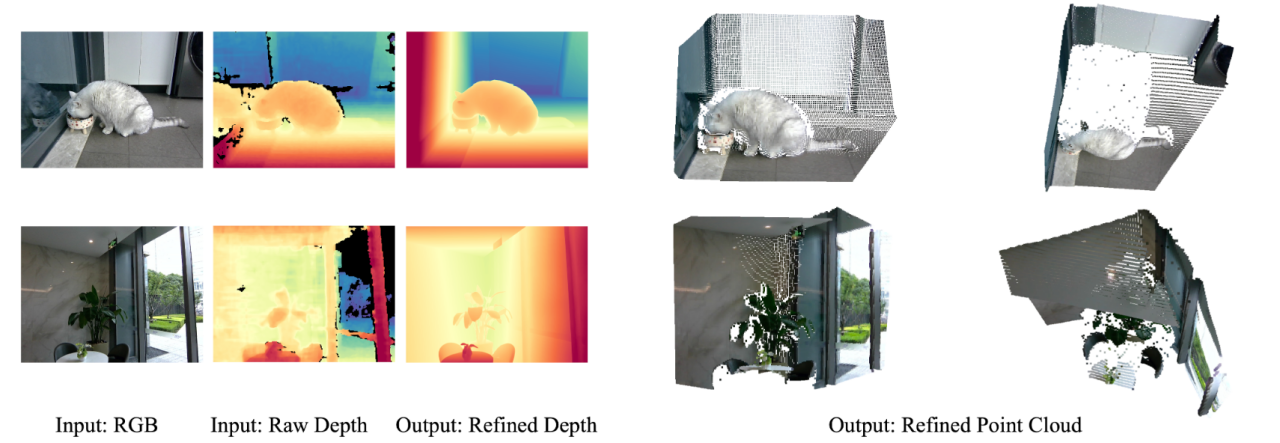
On July 7, LingBot Technology — the embodied-intelligence arm of Ant Group — unveiled LingBot-Depth 2.0, a spatial perception model trained on a 150-million-sample dataset. Improvements span edge sharpness, fine-object detection, long-distance depth estimation, and robustness under complex scenes. LingBot-Depth, LingBot's proprietary spatial perception model, functions as a robot's vision system in physical environments...